Visar inlägg med etikett UV resin. Visa alla inlägg

onsdag 4 maj 2016

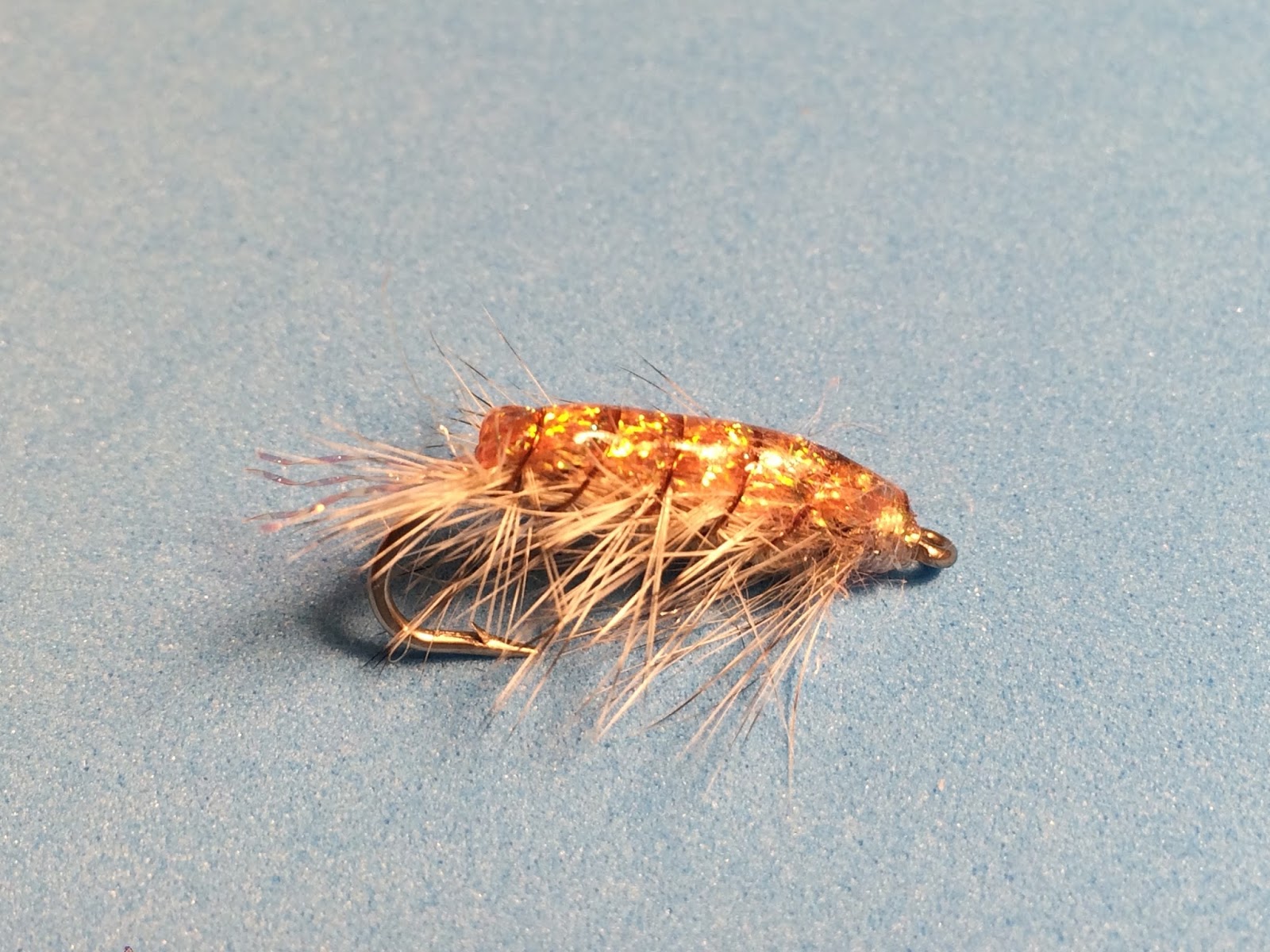
No16. UV Mysis


Mysis can be a good choice of pattern when fishing for sea trout on the coast. It is a easy prey  and available in plenty. 
Quite often this pattern works when looking active fish in shallow water but that not are interested in larger flies.

Hook: Kamasan B110 size 12 and 10.
Thread: Thin transperant monofile thread as Veevus Monofile 0,1mm for example.
Tail, back and antenna:  White Super Hair. 6-8 strands
Thorax: A very smal amount of burnt orange and sand saltwater dubbing. Ehen you hav dubbed the thorax you shold lay the Super Hair over the thorax as a back.
Eyes: Black chain eyes. 
Covering: Cover the tail, hook and back with UV resin. When you are curing the resin bend the tail as in the picture and remember to leave about 2-3 mm ot the superhair with out UV resin. 


tisdag 3 maj 2016

No 20. Braided damsell

Braided Damsell

Tying description

Hook: Kamsan B110 size 10

Thread: Olive


Eyes: 0.50 mm nylonmono that is burned on the ends. The eyes should be 3-4 mm wide

Tail: braided mono burned at one end. 
Before the melted plastic lump become solidi again flatten it between thumb and forefinger. 
To get the right shape you have to draw a little light in the braided mono so that the lump gets a bit stretched. 
Do not forget to moisten your fingers with a little saliva so you do not burn your fingertips.
Then you cut the shape of the tail with a sharp pair of scissors and color it with olive waterproof marker.

Thorax cover and wing buds: 4mm olive-body stretch.

Thorax: 3mm or 3.2 mm brass goldhead closest to the eyes, and then a few laps Olive Medium Crystal hackle.

Head. The eyes pupils is then painted black with a markerpen and then covered with UV resin.


Good luck and enjoy 


torsdag 25 februari 2016

No19. Angel Sandeal

Angel Sandeal. 

Materiallist
Hook: Maruto SS 1930 size 6
Thread: Smal transperant monofile thread
Bottom tail: Start the tail with about 20 strands of white super hair. Cut them so the only will be about 30mm. They are used for preventing the other tail material to be caught around the hook bend when you are fishing.
Tail and Body: Silver and chartreuse Angel Hair
Spot: I put a smal spot on the belly with a fluo orange or red permanent marker pen before i cote the front with uv resin.
Body cover: Solarez UV resin, thin.
Eyes:  Fluo yellow 3,5 mm flat or 3D stick on eyes. 


måndag 25 januari 2016

10 and 11. The Orange Nullermand and Converted Orange Nullermand

In the 80's when I seriously started fishing for seatrout on the coast with fly, the number of patterns that were counted as coastal flies were easily counted.
Just then, as now, it was the Danish coastal fishermen that where creative and including Jan Grünwald accounted for many published designs.
One pattern, that Jan had published, struck me early and that i used frequent was Orange Nullermand. A shrimp patterns that worked both as a hanger, on the leader and to bombarda fishing.
At that time there were not bombarda in itself. We fished with homemade throwing weights made of  round wood rods that was sanded down to a suitable form and weighted before they were painted and lacquered. For many years Nullermanden was a favorite pattern but with time it was left to oblivion, to a space in the fly box where it got to be undisturbed for many years, but then, a few years ago, it was put back on the fly-tippet and delivered a nice sea trout again.
After a while, when I was tying up new orange Nullermand I started thinking about converting the pattern with today's modern hooks and materials.
The converted pattern delivered almost immediately and now it along with the original pattern their place in the box


The Converted Orange Nullermand on top and the original bel ow


Converted Orange Nullermand
Materials List
Hook: Mustad C47 S shrimphook
Thread: Clear mono escape tying thread
Weight: 6-8 turns leadwire
Tail: 8-10 Golden Pheasant tippet fibers
Back: about 15 strands of dark olive or peacook green crystal flash
Back Cover: UV varnish
Rib: Small round goldtinsel
Hackle: Orange grizzly hackle
Body: Saltwater Dubbing, burnt orange,
Head: Tying thread

Original Orange Nullermand
Materials List
Hook: Double Salmon Hook size 6-12
Thread: Black
Tail: 8-10 Golden Pheasant tippet fibers
Back: 6-8 strands of Peacook hearl
Rib: Small round goldtinsel
Hackle: Orange grizzly hackle
Body: Orange chenille
Head: Tying thread


tisdag 12 januari 2016

No 5. Grey seatrout zonker


The Grey seatrout zonker is a good and productive patterns for fishing for seatrout on the coast of Skåne in Sweden. It is a good imitation of various bait fish such as sticklebacks, small herring and IF you use alternative colors such as various shades of brown, it will be a good imitation of eelpout and gobies

Material list
Hook: Partridge CS54 size 6 and 4.
Thread: Transperant monofilament thread.
Weight: 8-10 turns of leadwire around the hookshank.
Tail/wing: Gray zonkerstrip. 3 mm wide.
Body: Pearl ice dub. 
Throat: Small bunch of red ice dub.
Eyes: 3D epoxy eyes, 4-5 mm.
Head: The eyes coverd with UV resin. 

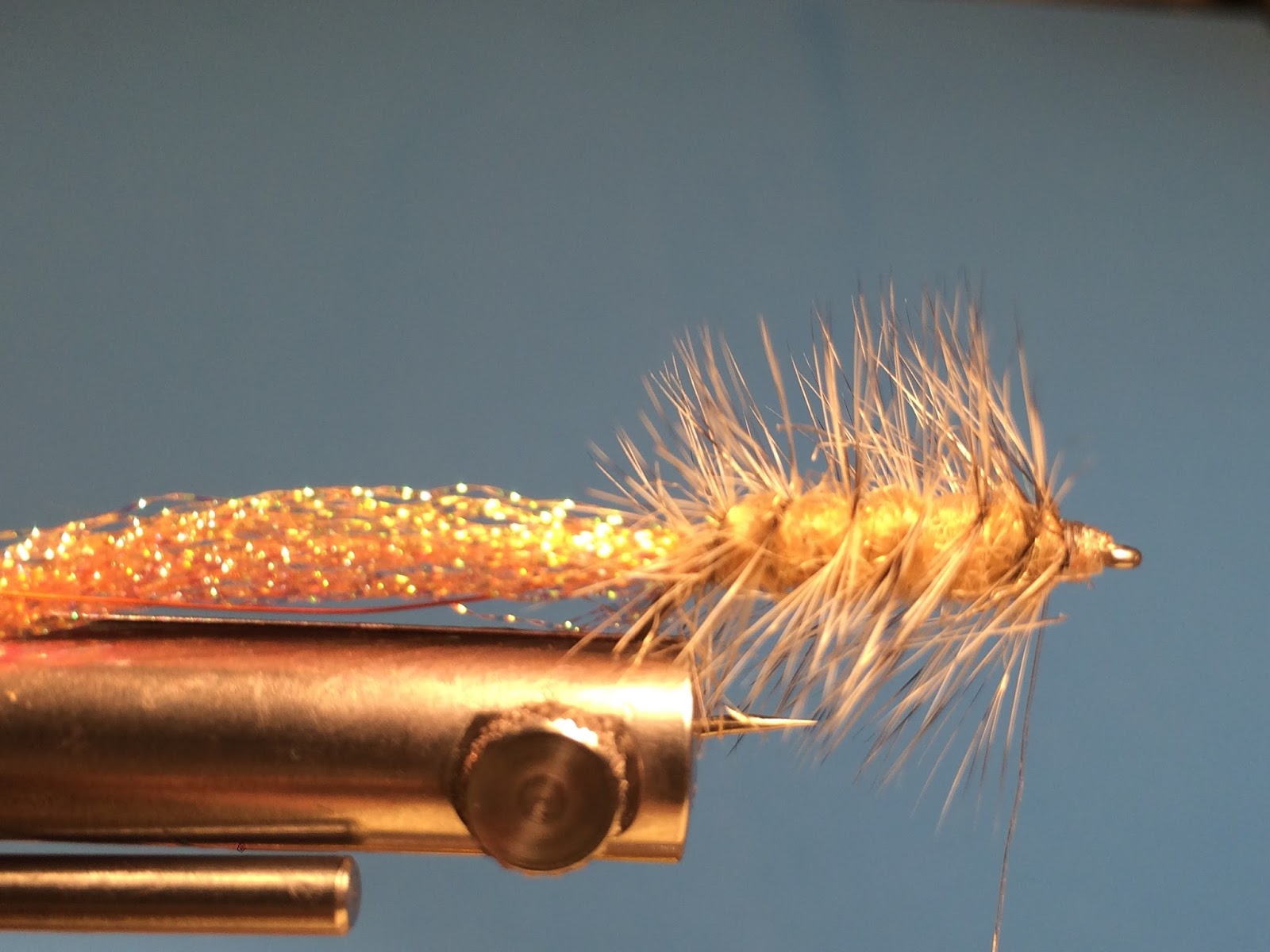
No 4. UV Epoxy Gammarus


UV Epoxy Gammarus


Material list
Hook:  Maruto SS-1930 size 8 or 6  
Weight: 6-8 turns of lead wire
Thread: Clear nylon thread
Antenna/tail: 4 strands of crystal flash. This colour is something like pale orange, almost tan.
Rib: Copper wire
Body: Saltwater dubbing. Transparant Tan
Hackle: Grizzle Cook hackle
Back: About 20 strands och the same crystal flash you used to the antenna.
Shell: UV resin


1. Wrap the hook with 6-8 laps lead wire.


2. Attach the thread and secure the leadwire. After that fasten the copperwire.


3. Take 4 crystal flash and tie them in as antennas.
Cut them so length will be about 10 mm.


4. Take about 20 strands of the same crystal flash and tie them in on top of the antenna.  


5. Attach the grizzle hackle in the tip on top of the crystal flash.


6. Dub the thread.


7. Wind a boddy. It should be a Little thicker in the middle

8. Wind the hackle 6-7 turns around the boddy. 


9. Fold the crystal flash over the body and hackle and attach it just behind the hook eye.


10. Cut of the rest of the crystal flash

11. Rib the body with 6-7 turns of the copper wire.

12. Fasten the copper wire. Cut it of and form a neat head with the thread and cut of the thread.


13. Cover the back with a layer of UV resin.


14. Cure the resin with UV lamp.


15. The gammurus flie are now ready for action.