Visar inlägg med etikett seatrout. Visa alla inlägg

onsdag 4 maj 2016

No16. UV Mysis


Mysis can be a good choice of pattern when fishing for sea trout on the coast. It is a easy prey  and available in plenty. 
Quite often this pattern works when looking active fish in shallow water but that not are interested in larger flies.

Hook: Kamasan B110 size 12 and 10.
Thread: Thin transperant monofile thread as Veevus Monofile 0,1mm for example.
Tail, back and antenna:  White Super Hair. 6-8 strands
Thorax: A very smal amount of burnt orange and sand saltwater dubbing. Ehen you hav dubbed the thorax you shold lay the Super Hair over the thorax as a back.
Eyes: Black chain eyes. 
Covering: Cover the tail, hook and back with UV resin. When you are curing the resin bend the tail as in the picture and remember to leave about 2-3 mm ot the superhair with out UV resin. 


No 23. Stickleback Zonker

Stickleback Zonker 


When fish is feeding on smal baitfish as stickleback this can be a good fly. 
In some of my water that i frequently fish in, grey is a alround color and therfore works realy good all year round. 
When we fish for grayling in the stream in northern Sweden a little gray Zonker sometimes can  be really effective.

Materiallist
Hook: Maruto W12 size 8 or 6
Thread: Gray
Butt. Glo Brite floss. Hot orange.
Body: Dubbing, HareÉ Ice dub, gray.
Throat: A small bunch of red rabbit hair
Wing: Gray zonker strip, 1,5 mm wide
Head/front body: Gray zonker looked in a b dubbing loop. Twisted and winded towards the hookeye. Then combed and trimmed.
Eyes: 3 mm 3d epoxy eyes. Glued and coverd with UV resin.

If you want a heavier fly you can add some turns of leadwire under the body.

torsdag 25 februari 2016

No19. Angel Sandeal

Angel Sandeal. 

Materiallist
Hook: Maruto SS 1930 size 6
Thread: Smal transperant monofile thread
Bottom tail: Start the tail with about 20 strands of white super hair. Cut them so the only will be about 30mm. They are used for preventing the other tail material to be caught around the hook bend when you are fishing.
Tail and Body: Silver and chartreuse Angel Hair
Spot: I put a smal spot on the belly with a fluo orange or red permanent marker pen before i cote the front with uv resin.
Body cover: Solarez UV resin, thin.
Eyes:  Fluo yellow 3,5 mm flat or 3D stick on eyes. 


No 18. Copper Gammarus

Lägg till bildtext

Materiallist
Hook: Kamasan B110 size 10-6 or any similar shrimp/caddis hook with heavy hook thickness
Thread: Brown
Tail/Antenna: Mallard dyed in Summer duck color
Rib: Copperwire
Body: Holo copper icedub
Back: Brown or olive 4 or 6 mm wide body strech


1. Attach the thread 

2. Tie in a bunch, about 10 mallard fiber as a tail and the same as antenna 

3. Attach the rib 

4. and then the body-strech on top of the hook shank

5. Then dub a quite thick body and then fold the body strech as a back over the fly. 

6. Rib the body with 6-7 turns of the copperwire. Attach the rib and cut it of. Finish with a neat head. 

7. Brush the dubbing to create the legs. 

8. The fly should now look like this. Dubbing fiber well picked out.

9. Cut the dubbing fiber just above the hook point. 

10 A bunch of copper gammarus ready for fishing. 


onsdag 17 februari 2016

No 17. Wiggling Gummi Creaps


 Wiggling Gummi Creaps


Material list

Abdomen 
Hook: 1st Mustad S71SZ Size 6
Thread: Black
Tail: 2 black-red sili legs.
Body: Black Spectra Dubbing
Legs: The same sili legs as used for the tail but the black part.


Front body


Link to the abdomen: 0.35 to 0.40 mm fluorocarbon
Hook: 1st S71SZ Size 6
Thread: Black
Eyes: Silver Medium (about 3mm) dumbbell eyes with yellow / black flat stick eyes glued on the dumbell.
Tail: 2 black-red silicone legs.
Body: Black Spectra dubbing. Dub also between the eyes.
Legs: The same sili legs as used for the tail but the black part.


1.Start by attaching the tying thread on the hook to be abdomens hook. Wrap the thread to the hook bend.

2. Attach the sili legs folded double to make the four red ends pointing backward like a tail. Wrap the leftover black parts forward to the hook eye.

3. Dub a tapered body with black Spectra dubbing forward to just behind the hook eye.

4. Cut the loop with the black part of silicone legs. Fold them backwards beside of both sides of the hook so that there is two pieces on each side. Attach and cut the thread. Varnish the ending.

5. Continue to cut off the hook just at the bend.

6. Attach the hook for the front body and secure 5-6 cm fluorocarbon on the top of the hook. Secure the attachment with a drop of superglue.

7. Thread the abdomens on to the fluorocarbon. Fold the fluorocarbon forwards so that the rear body dangles in a small loop. Attach fluorocarbon and secure with a drop of superglue. Cut of the remaining fluorocarbon.

8. Tie a similar body like the one on the abdomen with the tail and legs but end the body about 2-3 mm in front of the hook eye

9. Attach the dumbbell eyes. Secure with a drop of super glue.

10. Dub with figures of eights around the eyes. Attach and cut the thread. Varnish the ending.

11. Glue the flat stick eyes on the dumbbell eyes. I usually add a small drop of super glue under the eyes to be absolutely sure they are secure.


This fly has an incredibly seductive jigging movement in the water and can of course be tied in different color combinations. Variations of olive, white, orange and red tend to be toxic. The fly has been an incredible killer for fishing rainbowtrout in lakes and streams and for seatrout on the coast and in river and streams.


No 15. Sandräkan/Sandshrimp


Sand shrimp is one of my old solid and reliable designs for coastal fishing for sea trout.
Already in the late 1970s sitting the fly hanger fly above the coastal lure. 
Later when flyfishing for seatrout took over, this pattern was often the obvious choice.

Material list
Hook: Partridge CS54 size 4-8
Thread: Red
Weight: lead wire
Tail: Two grizzly or Cree colored hackle tip
Body Rib: Copper wire
Body: SLF Saltwater Dubbing in sand color or other similar dubbing
Body hackle Grizzly or Cree colored cock hackle. Must be of good quality with quite rigid hackelfibrer and it'll be pretty long.
Front hackle: The same as the bodyhackle. 
Head: Red tying thread.


1. Start with winding 10-12 laps lead wire around the hook shank.

2.Attach the thread and secure the lead wire by wrapping the thread a few times back and forth over the lead wire. Stop with the thread at about the hookbarb.

3. Take two grizzly or Cree hackle.
To use for the tail you can use a cheaper variant then genetic cock hackle. 

4. Attach the hackle on the hookshank just above the hook barb. The tail should have a lenght of about half or 2/3 of the hookshank. 

5. Attach 10-15 cm copperwirw and then dub a nice carrot shaped body. Rememder to leave a litle space in  front of the hook eye so that ther will be enough space for the fronthackle and head. 

6. Attach the boody hackle.

7. Vind the hackle 7-8 even turns over the dubbed body towards the tail. Secure the hackle by winding the copperwire towards the hookeye and through the hackle. 

8. Secure the wire and remove the rest. 

9. Take another hackle 

10. Attach the fronthackle in the tip and doubble fold the hacklefibers. 

11. Wind a nice frontcollar. Attack the hackle and remove the rest. 

12: Finish the fly with a neat head and warnish it and the fly is ready for action. 


No 14. Sili Rabbit

CC Sili Rabbit, Black / Red

Hook: Mustad streamer Signature Saltwater S74SZ Size 4 or 6
Thread: Black
Eye / Weight: Silver dumbbell eyes or nickel / silver chain eyes
Tail: Three black-red silicone legs.
Body / Wing: Black cross cut Zonker.
Front: Four pearl crystal flash and two black-red silicone legs


1. Start by attaching the winding thread in the middle of the hook shank and wrap it back to the hook bend. Attach three sili legs that you first folded so that the red ends are facing each other. Attach them a few mm into the black part at the sili leg so that all the red ends are pointing backwards. Secure with a few turns of the winding thread.

2. Open up the loop that lies ahead of the hook shank with scissors. Fold them back over the red ends. Tie it in with a couple of turns whit the tying thread. Secure with a small drop of super glue.

3. Take strips of black cross cut Zonker and cut to the end of the strip to a sharp point and attach it just in front of the attachment of the tail. The hair should now be pointing backward.

4. Wrap the zonkerstrip forward toward the hook eye without letting the turns overlapping each other. Attach the strip with a few turns of thread a few millimeters before the hook eye.

5. Cut of the strip. Secure with a tiny drop of superglue. Attach four Pearl Crystal Flash lying on top of the fly. Cut them off at the end of the tail.

6. Then take two black-red sili legs and attach them a few mm into the black part at the sili leg so that the red ends are pointing backwards on one of the sides of the hook.

7. Fold the other red part and tie them in the same way on the other side of the hook.

8. Cut the sili legs loop pointing forward.

9. Fold the black ends of the red and secure them. There should now be four sili legs on each side of the hook, pointing backwards

10. Attach the eyes whit figure of eights just in front of the sili legs. Attach the thread. Cut and finish by securing the eyes with a small drop of super glue.

11. Glue the flat stick eyes on the dumbbell eyes. I usually add a small drop of super glue under the eyes to be absolutely sure they are secure.


This typ of flies can be combined in countless different color variants. Only your imagination sets the limits. I myself have had the most success with black, orange, red, olive and white varieties. I tye them in different weights by varies the choice of eyes.

tisdag 9 februari 2016

No 13. Minizonker

Gray mini Zonker is a very simple pattern, both tying but also in the choice of materials.
I have a special love for simple flies in my practical fishing. I foten fish hard and it takes quite a few flies on my fishing trips. Mini Zonker has al that the ingredients that I look for. Simple and fast to tie. Of course you can also tye this type of fly in a larger sizes. I have managed quite well with the coastal fishing for sea trout on the coast of Skåne in Sweden with this fly. 


Materials list

Hook: Maruto SS-1930 Size 10-8
Thread: White. I like UTC 70 thread.
Body. 5-6 straw pearl flashabou that is wrap over the hook shank a couple of times back and forth. Remember not to go forward with the body until the hook eye.
If you want a really strong body. You can cover it with a layer of UV varnish / glue.
Wing: A short gray Zonker Strip. It will only be enough to just reach behind the hook bend. It should only be attached in one point and that is just behind the hook eye.
Eyes: Black chain eyes
Main / Front Body: Hair from the gray zonker strip put in a dubbing loop, twisted and then wound around the eyes. Once it is done, and the thread is attached and cut of I brush out the hair and cut them down to a small pretty head.
Remember not to use too much hair. It easily becomes bulky and hard to trim a nice head. 


måndag 25 januari 2016

10 and 11. The Orange Nullermand and Converted Orange Nullermand

In the 80's when I seriously started fishing for seatrout on the coast with fly, the number of patterns that were counted as coastal flies were easily counted.
Just then, as now, it was the Danish coastal fishermen that where creative and including Jan Grünwald accounted for many published designs.
One pattern, that Jan had published, struck me early and that i used frequent was Orange Nullermand. A shrimp patterns that worked both as a hanger, on the leader and to bombarda fishing.
At that time there were not bombarda in itself. We fished with homemade throwing weights made of  round wood rods that was sanded down to a suitable form and weighted before they were painted and lacquered. For many years Nullermanden was a favorite pattern but with time it was left to oblivion, to a space in the fly box where it got to be undisturbed for many years, but then, a few years ago, it was put back on the fly-tippet and delivered a nice sea trout again.
After a while, when I was tying up new orange Nullermand I started thinking about converting the pattern with today's modern hooks and materials.
The converted pattern delivered almost immediately and now it along with the original pattern their place in the box


The Converted Orange Nullermand on top and the original bel ow


Converted Orange Nullermand
Materials List
Hook: Mustad C47 S shrimphook
Thread: Clear mono escape tying thread
Weight: 6-8 turns leadwire
Tail: 8-10 Golden Pheasant tippet fibers
Back: about 15 strands of dark olive or peacook green crystal flash
Back Cover: UV varnish
Rib: Small round goldtinsel
Hackle: Orange grizzly hackle
Body: Saltwater Dubbing, burnt orange,
Head: Tying thread

Original Orange Nullermand
Materials List
Hook: Double Salmon Hook size 6-12
Thread: Black
Tail: 8-10 Golden Pheasant tippet fibers
Back: 6-8 strands of Peacook hearl
Rib: Small round goldtinsel
Hackle: Orange grizzly hackle
Body: Orange chenille
Head: Tying thread


torsdag 21 januari 2016

No 7. The Parrot


The Parrot is a fly that I use often when the water temperature is a bit lower. Both sea trout and rainbow trout seem to like it.

Material list
Hook: Maruto C41SE. Streamer hook with a bent hook shank, size 4-8
Thread: Black
Tail: A small stack of hot orange fox hair. The length should be about 2/3 of the hook shank.
Body: Pearl Crystal hackle 5mm.
Wing: Fox hair. Yellow with green Highlander on top the yellow. The wing will reach back to the end of the tail. In between the different layers of the wing I tie in a 2 strands of pearl flashabou.
Hackle: A well marked Teal feather.
Overwing: A small stack of black fox hair tied in over the hackle and the yellow / green wing.
Head: Black tie wire lacquered 3-4 times and then painted eyes on the sides. White or yellow background with black pupills.
If you want to add some more weight to the flie you can use silver chain eys insted of painting the eyes.

tisdag 12 januari 2016

No 5. Grey seatrout zonker


The Grey seatrout zonker is a good and productive patterns for fishing for seatrout on the coast of Skåne in Sweden. It is a good imitation of various bait fish such as sticklebacks, small herring and IF you use alternative colors such as various shades of brown, it will be a good imitation of eelpout and gobies

Material list
Hook: Partridge CS54 size 6 and 4.
Thread: Transperant monofilament thread.
Weight: 8-10 turns of leadwire around the hookshank.
Tail/wing: Gray zonkerstrip. 3 mm wide.
Body: Pearl ice dub. 
Throat: Small bunch of red ice dub.
Eyes: 3D epoxy eyes, 4-5 mm.
Head: The eyes coverd with UV resin. 

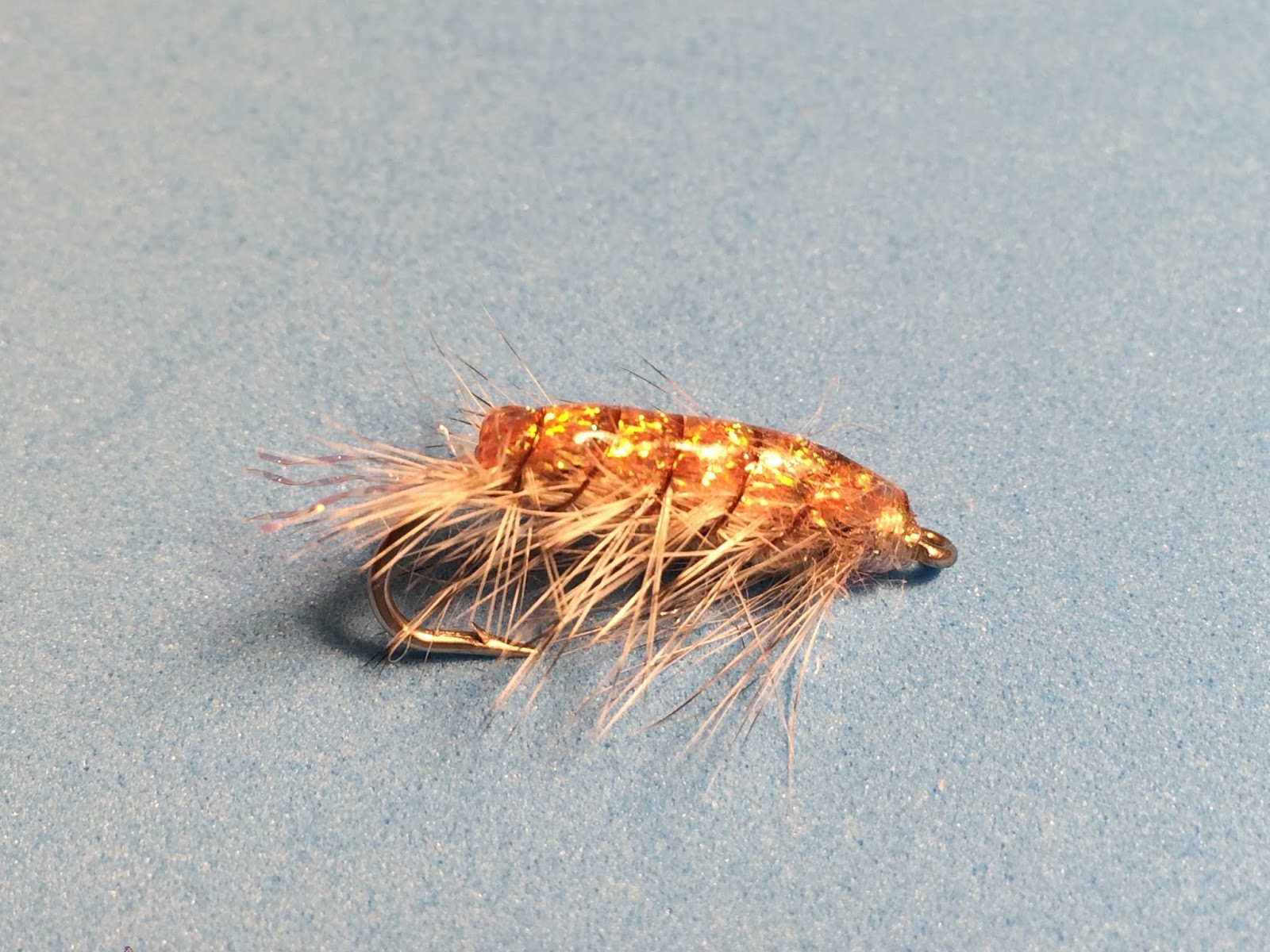
No 4. UV Epoxy Gammarus


UV Epoxy Gammarus


Material list
Hook:  Maruto SS-1930 size 8 or 6  
Weight: 6-8 turns of lead wire
Thread: Clear nylon thread
Antenna/tail: 4 strands of crystal flash. This colour is something like pale orange, almost tan.
Rib: Copper wire
Body: Saltwater dubbing. Transparant Tan
Hackle: Grizzle Cook hackle
Back: About 20 strands och the same crystal flash you used to the antenna.
Shell: UV resin


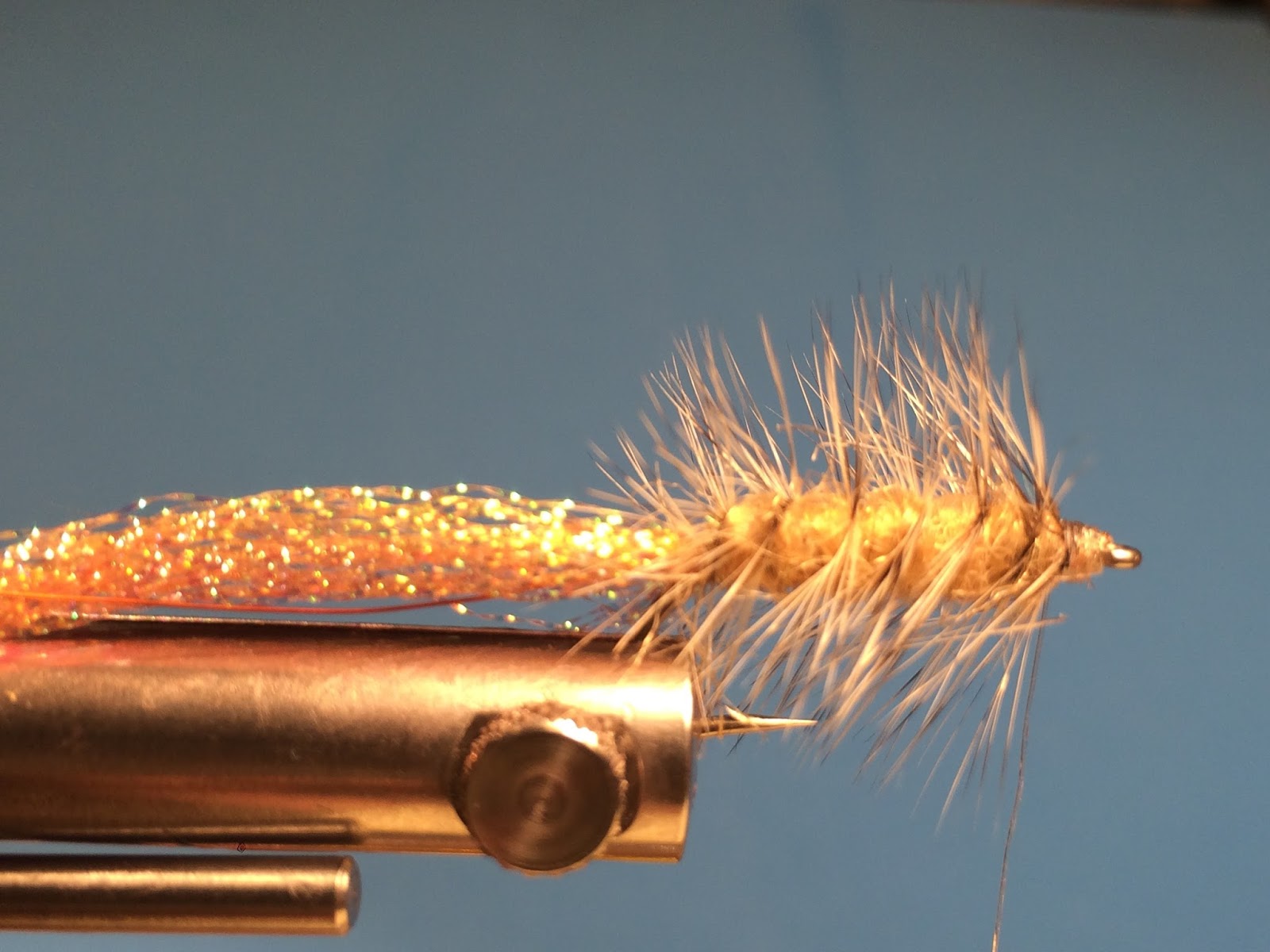
1. Wrap the hook with 6-8 laps lead wire.


2. Attach the thread and secure the leadwire. After that fasten the copperwire.


3. Take 4 crystal flash and tie them in as antennas.
Cut them so length will be about 10 mm.


4. Take about 20 strands of the same crystal flash and tie them in on top of the antenna.  


5. Attach the grizzle hackle in the tip on top of the crystal flash.


6. Dub the thread.


7. Wind a boddy. It should be a Little thicker in the middle

8. Wind the hackle 6-7 turns around the boddy. 


9. Fold the crystal flash over the body and hackle and attach it just behind the hook eye.


10. Cut of the rest of the crystal flash

11. Rib the body with 6-7 turns of the copper wire.

12. Fasten the copper wire. Cut it of and form a neat head with the thread and cut of the thread.


13. Cover the back with a layer of UV resin.


14. Cure the resin with UV lamp.


15. The gammurus flie are now ready for action.