Visar inlägg med etikett shrimp. Visa alla inlägg

onsdag 4 maj 2016

No16. UV Mysis


Mysis can be a good choice of pattern when fishing for sea trout on the coast. It is a easy prey  and available in plenty. 
Quite often this pattern works when looking active fish in shallow water but that not are interested in larger flies.

Hook: Kamasan B110 size 12 and 10.
Thread: Thin transperant monofile thread as Veevus Monofile 0,1mm for example.
Tail, back and antenna:  White Super Hair. 6-8 strands
Thorax: A very smal amount of burnt orange and sand saltwater dubbing. Ehen you hav dubbed the thorax you shold lay the Super Hair over the thorax as a back.
Eyes: Black chain eyes. 
Covering: Cover the tail, hook and back with UV resin. When you are curing the resin bend the tail as in the picture and remember to leave about 2-3 mm ot the superhair with out UV resin. 


torsdag 25 februari 2016

No 18. Copper Gammarus

Lägg till bildtext

Materiallist
Hook: Kamasan B110 size 10-6 or any similar shrimp/caddis hook with heavy hook thickness
Thread: Brown
Tail/Antenna: Mallard dyed in Summer duck color
Rib: Copperwire
Body: Holo copper icedub
Back: Brown or olive 4 or 6 mm wide body strech


1. Attach the thread 

2. Tie in a bunch, about 10 mallard fiber as a tail and the same as antenna 

3. Attach the rib 

4. and then the body-strech on top of the hook shank

5. Then dub a quite thick body and then fold the body strech as a back over the fly. 

6. Rib the body with 6-7 turns of the copperwire. Attach the rib and cut it of. Finish with a neat head. 

7. Brush the dubbing to create the legs. 

8. The fly should now look like this. Dubbing fiber well picked out.

9. Cut the dubbing fiber just above the hook point. 

10 A bunch of copper gammarus ready for fishing. 


onsdag 17 februari 2016

No 15. Sandräkan/Sandshrimp


Sand shrimp is one of my old solid and reliable designs for coastal fishing for sea trout.
Already in the late 1970s sitting the fly hanger fly above the coastal lure. 
Later when flyfishing for seatrout took over, this pattern was often the obvious choice.

Material list
Hook: Partridge CS54 size 4-8
Thread: Red
Weight: lead wire
Tail: Two grizzly or Cree colored hackle tip
Body Rib: Copper wire
Body: SLF Saltwater Dubbing in sand color or other similar dubbing
Body hackle Grizzly or Cree colored cock hackle. Must be of good quality with quite rigid hackelfibrer and it'll be pretty long.
Front hackle: The same as the bodyhackle. 
Head: Red tying thread.


1. Start with winding 10-12 laps lead wire around the hook shank.

2.Attach the thread and secure the lead wire by wrapping the thread a few times back and forth over the lead wire. Stop with the thread at about the hookbarb.

3. Take two grizzly or Cree hackle.
To use for the tail you can use a cheaper variant then genetic cock hackle. 

4. Attach the hackle on the hookshank just above the hook barb. The tail should have a lenght of about half or 2/3 of the hookshank. 

5. Attach 10-15 cm copperwirw and then dub a nice carrot shaped body. Rememder to leave a litle space in  front of the hook eye so that ther will be enough space for the fronthackle and head. 

6. Attach the boody hackle.

7. Vind the hackle 7-8 even turns over the dubbed body towards the tail. Secure the hackle by winding the copperwire towards the hookeye and through the hackle. 

8. Secure the wire and remove the rest. 

9. Take another hackle 

10. Attach the fronthackle in the tip and doubble fold the hacklefibers. 

11. Wind a nice frontcollar. Attack the hackle and remove the rest. 

12: Finish the fly with a neat head and warnish it and the fly is ready for action. 


måndag 25 januari 2016

10 and 11. The Orange Nullermand and Converted Orange Nullermand

In the 80's when I seriously started fishing for seatrout on the coast with fly, the number of patterns that were counted as coastal flies were easily counted.
Just then, as now, it was the Danish coastal fishermen that where creative and including Jan Grünwald accounted for many published designs.
One pattern, that Jan had published, struck me early and that i used frequent was Orange Nullermand. A shrimp patterns that worked both as a hanger, on the leader and to bombarda fishing.
At that time there were not bombarda in itself. We fished with homemade throwing weights made of  round wood rods that was sanded down to a suitable form and weighted before they were painted and lacquered. For many years Nullermanden was a favorite pattern but with time it was left to oblivion, to a space in the fly box where it got to be undisturbed for many years, but then, a few years ago, it was put back on the fly-tippet and delivered a nice sea trout again.
After a while, when I was tying up new orange Nullermand I started thinking about converting the pattern with today's modern hooks and materials.
The converted pattern delivered almost immediately and now it along with the original pattern their place in the box


The Converted Orange Nullermand on top and the original bel ow


Converted Orange Nullermand
Materials List
Hook: Mustad C47 S shrimphook
Thread: Clear mono escape tying thread
Weight: 6-8 turns leadwire
Tail: 8-10 Golden Pheasant tippet fibers
Back: about 15 strands of dark olive or peacook green crystal flash
Back Cover: UV varnish
Rib: Small round goldtinsel
Hackle: Orange grizzly hackle
Body: Saltwater Dubbing, burnt orange,
Head: Tying thread

Original Orange Nullermand
Materials List
Hook: Double Salmon Hook size 6-12
Thread: Black
Tail: 8-10 Golden Pheasant tippet fibers
Back: 6-8 strands of Peacook hearl
Rib: Small round goldtinsel
Hackle: Orange grizzly hackle
Body: Orange chenille
Head: Tying thread


tisdag 12 januari 2016

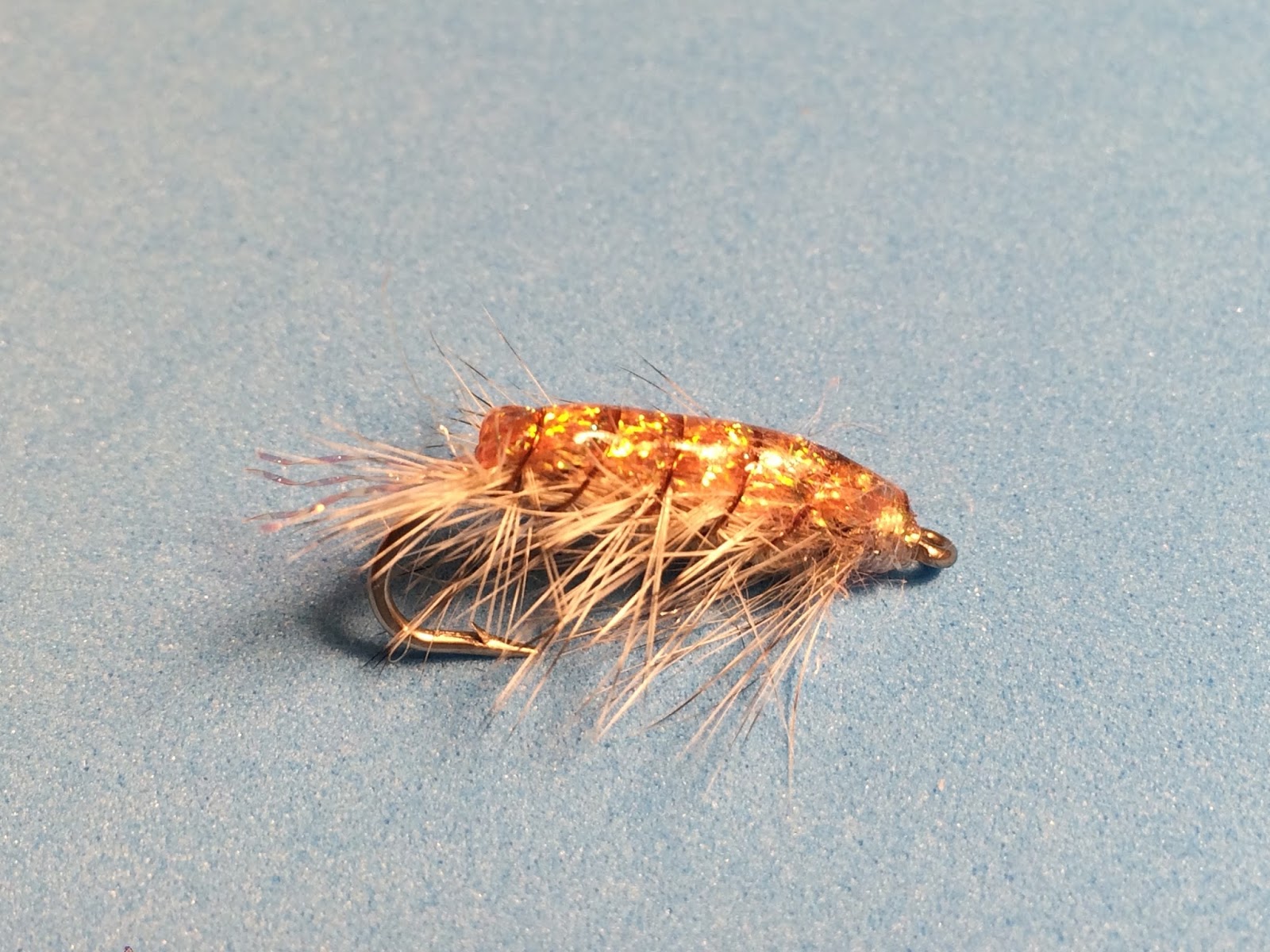
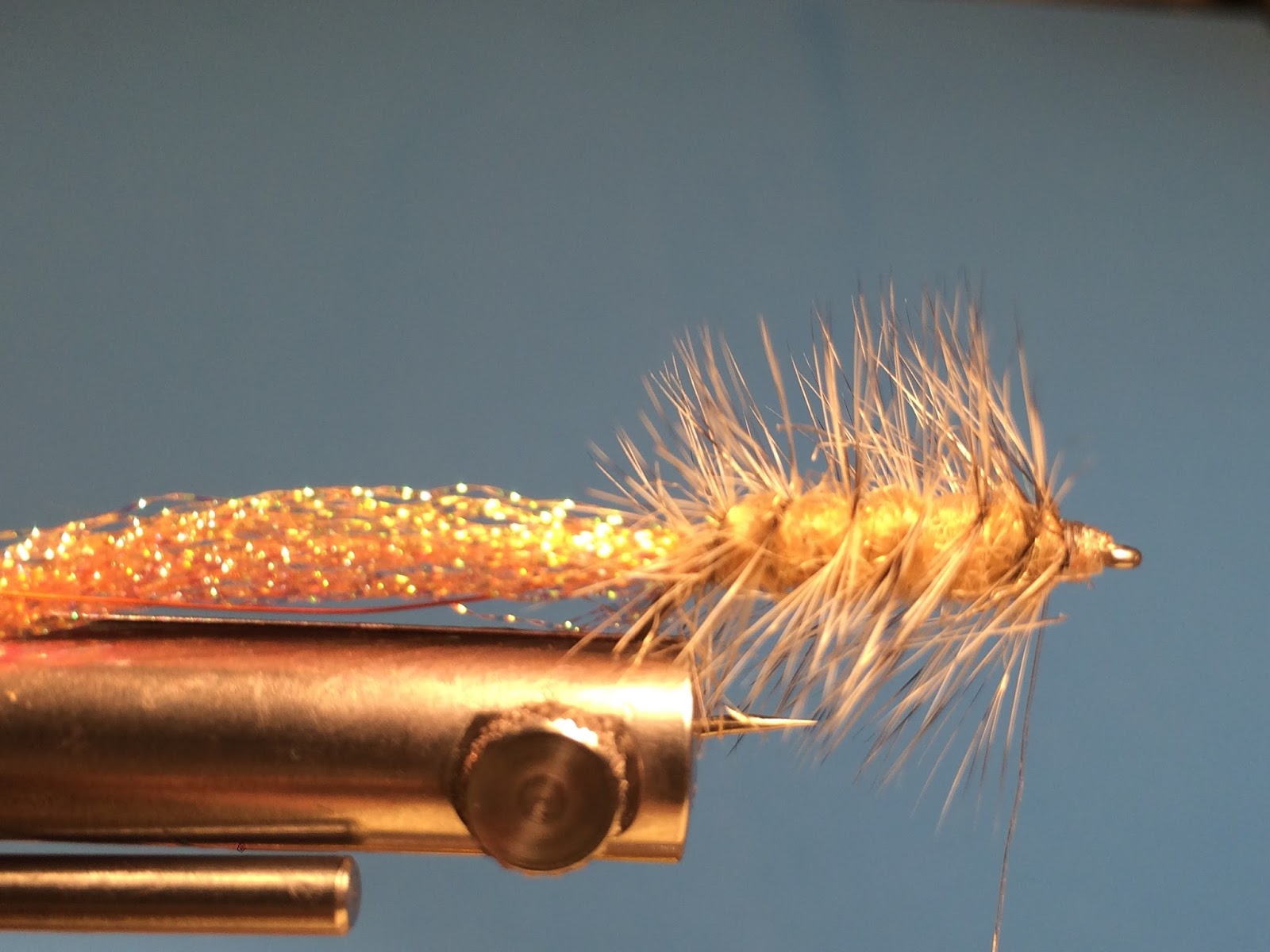
No 4. UV Epoxy Gammarus


UV Epoxy Gammarus


Material list
Hook:  Maruto SS-1930 size 8 or 6  
Weight: 6-8 turns of lead wire
Thread: Clear nylon thread
Antenna/tail: 4 strands of crystal flash. This colour is something like pale orange, almost tan.
Rib: Copper wire
Body: Saltwater dubbing. Transparant Tan
Hackle: Grizzle Cook hackle
Back: About 20 strands och the same crystal flash you used to the antenna.
Shell: UV resin


1. Wrap the hook with 6-8 laps lead wire.


2. Attach the thread and secure the leadwire. After that fasten the copperwire.


3. Take 4 crystal flash and tie them in as antennas.
Cut them so length will be about 10 mm.


4. Take about 20 strands of the same crystal flash and tie them in on top of the antenna.  


5. Attach the grizzle hackle in the tip on top of the crystal flash.


6. Dub the thread.


7. Wind a boddy. It should be a Little thicker in the middle

8. Wind the hackle 6-7 turns around the boddy. 


9. Fold the crystal flash over the body and hackle and attach it just behind the hook eye.


10. Cut of the rest of the crystal flash

11. Rib the body with 6-7 turns of the copper wire.

12. Fasten the copper wire. Cut it of and form a neat head with the thread and cut of the thread.


13. Cover the back with a layer of UV resin.


14. Cure the resin with UV lamp.


15. The gammurus flie are now ready for action.